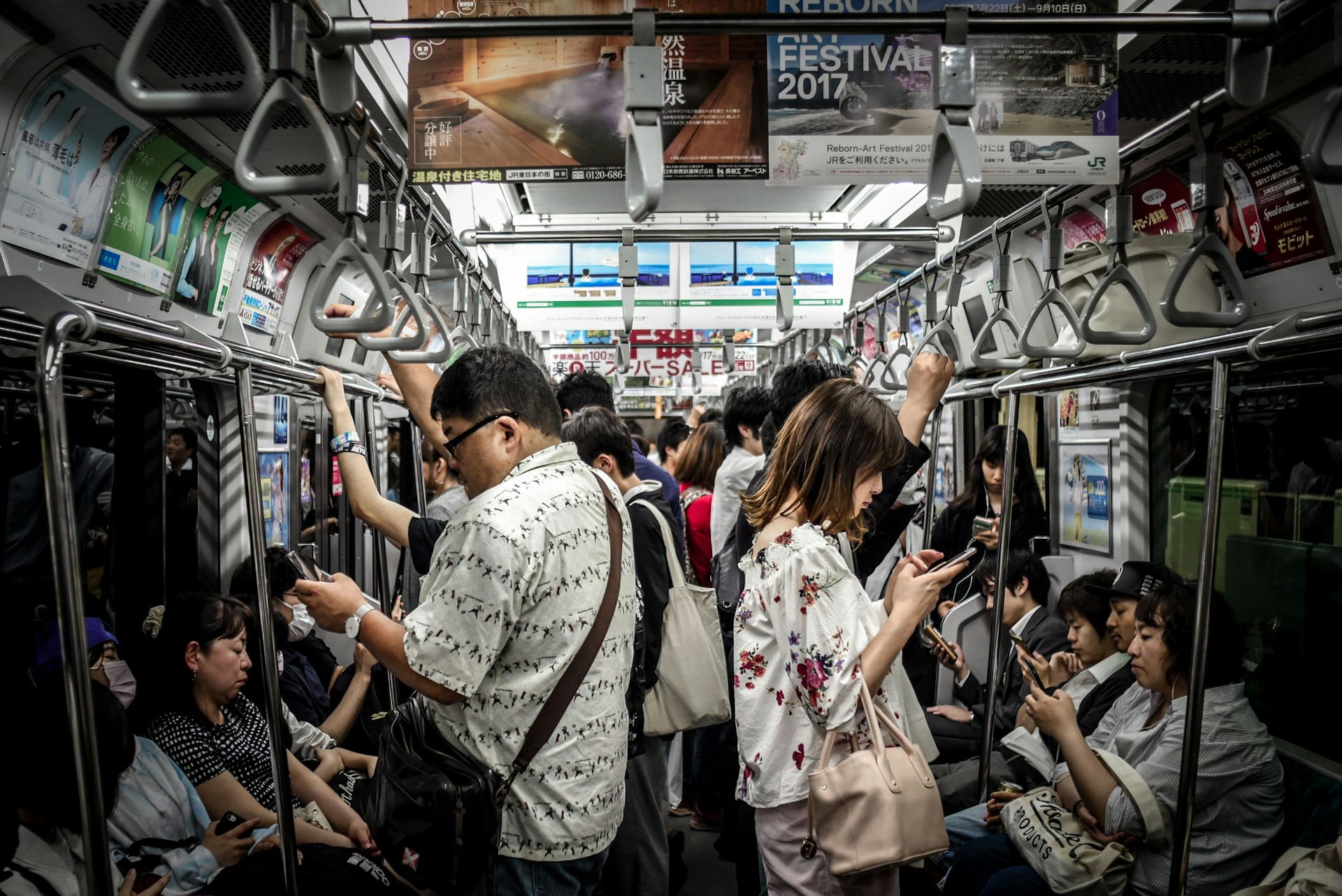
I watched a man at the coffee shop yesterday spend four minutes deciding between two identical t-shirts on his phone. Both cost $8.99. Both looked like they’d survive maybe three washes before becoming shop rags. He bought both. Then spent another six minutes scrolling through his Instagram feed, double-tapping pictures of other people’s identical t-shirts.
This is America. This is also Norway, Germany, Japan, and everywhere else the lights stay on past 9 PM. We’ve built a civilization where a grown man can agonize over disposable cotton for longer than he’d spend thinking about his retirement, his health, or whether his kid can read at grade level.
And here’s the thing that’ll keep you up at night if you let it: this is exactly what the system needs him to do.
The Shallowness Machine
There’s an 85-minute documentary on YouTube by Lewis Waller (Then & Now) called “Our Consumer Society” that lays out something most people feel but can’t articulate. The philosophers Jean Baudrillard and Fredric Jameson spent decades analyzing what they called the “depthlessness” of modern culture. Not deep versus shallow like “Marvel movies are shallow and Dostoevsky is deep.” No—they meant something more fundamental. They meant we’ve lost the ability to engage with anything beyond its surface because the surface is all that gets manufactured anymore.
David Harvey, another academic who actually understands how money works, nailed the economic mechanism: flexible accumulation. That’s the fancy term for “your t-shirt was designed in California, the buttons made in Vietnam, the fabric woven in Bangladesh, assembled in Honduras, shipped through Singapore, and sold to you by a company headquartered in tax-free Delaware while the actual humans involved never see each other and get paid whenever the algorithm decides they’ve produced enough today.”
The result? Nothing has depth because nothing CAN have depth. By the time the t-shirt exists, the world has moved on. New season, new color, new fit. The old one isn’t “out of style”—it never had a style to be out of. It was always just today’s disposable content, and today ended six hours ago.
Jameson called this “schizophrenic culture.” Jump from thing to thing, place to place, never settling long enough to actually understand anything. Just surfaces. Images. Vibes. And then it’s gone and here’s the next one.
The Bukowski Lesson
Charles Bukowski spent decades working at the post office, drinking cheap wine, and writing about the absurdity of American life in the 20th century. He wasn’t a philosopher. He was just a guy who noticed that most people spend their lives doing shit they hate to buy shit they don’t need to impress people they don’t like.
He’d walk into a bar at 2 PM on a Tuesday and there’d be the same guys, drinking the same drinks, complaining about the same women and the same bosses and the same bills. And he’d realize: these guys are living the same day over and over, except every iteration they’re a little older and a little broker and a little more certain this is just how it is.
But here’s where Bukowski gets interesting: he never thought he was better than them. He was right there at the bar, same stool, same drink. The difference was he looked at it straight. No bullshit. No “I’m working hard for my dreams” or “this is temporary until my ship comes in.” Just: “I’m trading my hours for dollars so I can drink them away because the alternative is thinking about trading my hours for dollars.”
That honesty is extinct now.
We’ve replaced it with: “I’m building my personal brand.” “I’m investing in experiences.” “I’m focusing on self-care.” “I’m living my best life.”
All of which are just prettier ways to say: “I’m spending money I don’t have on things that don’t last because the pain of not spending is worse than the pain of being broke.”
The Attention Economy Acceleration
Here’s where it gets ugly.
The old consumer trap worked like this: You work 40 hours, get paid, see advertisement for product, buy product, product breaks or goes out of style, repeat. Simple. Predictable. Soul-crushing but at least comprehensible.
The new consumer trap works like this: You work 40 hours, get paid, spend 30 hours scrolling platforms that monetize your attention, see 8,000 micro-advertisements disguised as content, develop parasocial relationships with people you’ll never meet, subscribe to their OnlyFans/Patreon/Premium/Exclusive Content, watch them live lives you can’t afford, buy products they shill, those products arrive and immediately feel empty, scroll more to fill the emptiness, repeat forever until death.
The product isn’t even the product anymore. The product is the feeling you get from the 4.5 seconds between clicking “buy” and the dopamine crash when you remember you just spent $89 on supplements from an influencer who might be CGI.
Sophie Rain makes $43 million a year on OnlyFans. That’s real money. But here’s the mathematical horror: she’s extracting that from tens of thousands of men who are paying $5, $10, $50 a month for parasocial intimacy they’ll never consummate.
Let’s do the ugly math: Average OnlyFans subscriber spends $45/month. Let’s say he makes $50,000 a year. Take-home after tax: maybe $37,000. $45/month = $540/year. That’s 1.4% of his takehome going to… what, exactly? Digital intimacy? The feeling of connection? Access to a woman who doesn’t know his name?
Now multiply that by the streaming services ($180/year), the gaming subscriptions ($180/year), the delivery apps ($600/year), the impulse Amazon purchases ($2,000/year). We’re at $3,500 annually—almost 10% of take-home—spent on nothing that lasts, nothing that builds, nothing that exists tomorrow.
Bukowski would’ve called it “paying for the privilege of feeling less alone while becoming more isolated.”
Baudrillard would’ve called it “the consumption of signs divorced from authentic need.”
I call it the exact mechanism by which the system keeps you compliant.
The Fracturing of Everything
David Harvey’s “flexible accumulation” isn’t just about t-shirts. It’s about everything.
Your job? Fractured into tasks, outsourced to contractors, gig-ified into hourly chunks, benefits stripped, pensions killed, security eliminated. You’re not an employee. You’re a flexible accumulation of labor hours.
Your relationships? Fractured into swipes, messages, hookups, situationships, “it’s complicated,” ghosting, breadcrumbing, and three years later you’re still single and your ex is married to someone they met in a coffee shop without an app.
Your attention? Fractured into 8-second TikToks, 280-character hot takes, 30-second Reels, infinite scroll, algorithmic feed, no beginning, no end, just middle forever.
Your sense of self? Fractured into personal brand, professional persona, online avatar, dating profile, LinkedIn optimization, Instagram aesthetic, “authentic self,” and underneath it all you can’t remember who you actually are when no one’s watching.
Nothing lasts because nothing is built to last because the economy requires constant replacement.
Harvey figured out that consumer goods companies need you to keep buying. But they hit a problem: How do you get people to replace things that still work? Answer: Stop making things that work. Fast fashion isn’t a bug, it’s the feature. Your $8.99 t-shirt is designed to fall apart after 12 washes because wash 13 is when you buy another one.
But it’s deeper than planned obsolescence. It’s planned meaninglessness.
The t-shirt never meant anything. It’s not “your favorite shirt.” It’s not “the shirt you were wearing when X happened.” It’s just shirt #47 in a continuous stream of identical shirts that you’ll own for 4 months and forget immediately.
Same with your subscriptions. Same with your content. Same with your relationships. Nothing lasts long enough to mean anything.
The OnlyFans Layer: Commodifying the Last Uncommodified Thing
For thousands of years, human connection was the one thing you couldn’t buy. You could buy sex—prostitution’s the oldest profession. You could buy companionship—courtesans existed in every civilization. But you couldn’t buy the feeling of being wanted by someone specific.
Until now.
OnlyFans and its ecosystem don’t sell sex. Pornography is free. They sell personalized attention. They sell the girlfriend experience without the girlfriend. They sell intimacy without the risk. They sell connection without the inconvenience of an actual human with needs and opinions and bad days.
And it works. $7.22 billion in 2024. Growing 9.1% year-over-year.
But here’s the thing that makes it perfect slavery: the subscribers think they’re choosing this.
Nobody’s forcing them to spend $45/month on parasocial relationships. They’re doing it voluntarily. They prefer it to:
- Actual dating (requires vulnerability, rejection risk, time investment)
- Actual relationships (requires compromise, communication, showing up)
- Actual sex (requires connection, physical presence, emotional availability)
The OnlyFans subscription is the ultimate shallow consumption. It’s so shallow it doesn’t even pretend to have depth. You know she doesn’t know you. She knows you don’t know her. The platform knows you both know it’s transactional. And yet you pay. And she performs. And the platform extracts 20%.
Baudrillard called this “hyperreality”—when the simulation becomes preferable to reality. When the menu tastes better than the meal. When the image is more desirable than the thing itself.
Jameson called it the “weakening of historicity”—when nothing has a past or future, only an eternal present of consumption.
I call it the logical endpoint of a system that commodifies everything, including the parts of being human that used to be uncomodifiable.
Your Time Is Your Life, and You’re Selling It for Shit
Aaron Clarey built his whole philosophy on one principle: everything is time. When you buy something, you’re not spending dollars—you’re spending the hours of your life you traded for those dollars.
That $8.99 t-shirt? At $20/hour after tax, that’s 27 minutes of your life. The t-shirt lasts three months. You’ll wear it maybe 15 times. You spent 27 minutes of your life for 15 wearings of disposable cotton. Math it out: 1.8 minutes of your life per wearing.
Now do that for everything you own. Your subscriptions, your impulse purchases, your “I deserve this” treats, your “just this once” splurges. Add it up. How many hours of your life are stored in shit you’ll never use again?
Bukowski knew this. He drank because at least when you’re drunk, you’re not counting the hours. But the math doesn’t stop just because you’re not watching.
You have roughly 4,000 weeks if you’re lucky. 80 years. Most people spend 40 of those years working. That’s 2,000 weeks—half your life—trading time for money. And then they take that money and trade it back for things that don’t last.
You’re born. You go to school for 16 years (free labor for the education system). You work for 40 years (selling your time to employers). You retire for 20 years (if you saved enough). You die. In between, you consume. You buy. You subscribe. You scroll. You accumulate. You discard. And nothing—nothing—lasts.
The t-shirt doesn’t last. The subscription doesn’t last. The dopamine hit from the purchase doesn’t last. The feeling of having enough doesn’t last. And you don’t last either.
The Producer Inversion Nobody Talks About
Here’s where it all comes together.
In a producer-based economy, wealth flows toward you. You build something, provide something, create something. Value moves in your direction.
In a consumer-based economy, wealth flows away from you. You buy things, subscribe to things, consume things. Value moves away from you.
The genius of modern capitalism is convincing you that consuming is producing.
You’re not just buying a t-shirt—you’re “supporting small businesses.” You’re not just scrolling OnlyFans—you’re “empowering sex workers.” You’re not just binging Netflix—you’re “engaging with important narratives.” You’re not just impulse shopping—you’re “practicing self-care.”
Every consumer behavior has been rebranded as productive activity. The vocabulary has shifted to hide the transaction. You’re not a consumer anymore—you’re a “community member,” a “supporter,” a “fan,” an “early adopter.”
But the math doesn’t lie: Wealth is flowing AWAY from you. Your bank account gets smaller. Their bank account gets bigger. You traded hours of your life for something that won’t exist in six months.
The platform wins (20% cut of every transaction). The creator wins (if they’re top 1%). You lose. And you’ll do it again tomorrow because the alternative is facing how little time you have left.
The Norway Problem: High-Trust Societies Collapse Faster
Scandinavian countries are fascinating case studies because they’ve built high-trust, high-welfare societies that, in theory, should be immune to predatory capitalism. Strong safety nets. Good education. Gender equality. Low corruption.
And yet: Norway’s fertility rate is 1.41. Median household debt-to-income is 150%. Labor force participation for men 18-35 is declining. OnlyFans usage is through the roof.
Why? Because when you remove the traditional incentives for building (provide for family, accumulate for old age, work hard to avoid poverty), you also remove the motivation to resist consumption.
If the state provides a minimum comfortable existence, why work 60 hours building a business? If women don’t need male providers economically, why develop provider capabilities? If OnlyFans offers top-of-market income for the top 1% of attractive women, why pursue education or career?
The safety net creates the conditions for perfect consumer slavery by eliminating the fear that once prevented overconsumption. You can’t fall too far. So you spend. And scroll. And subscribe. And consume. And the days blur together, and nothing lasts, and nothing matters, and your wallet is empty, but hey, at least you’ve got universal healthcare.
Bukowski would’ve seen it immediately: Give a man security and he’ll trade it for novelty. Give him comfort, and he’ll spend it on distraction. Give him everything he needs, and he’ll waste it on everything he doesn’t.
The Shallow End Where We All Drown
Baudrillard and Jameson were trying to warn us: A culture without depth can’t sustain itself. When everything is surface-level, when nothing connects to anything else, when history doesn’t matter and the future is just more of today, you get collapse.
Not a dramatic collapse. Not revolution or apocalypse. Just slow decay. The infrastructure built in the 1960s is crumbling because nobody’s building anymore. Fertility rates below replacement because nobody’s forming families. Innovation is slowing because attention extraction is more profitable than research. Communities are dissolving because parasocial relationships are easier than real ones.
You wake up one day and realize: The world your parents knew is gone. The world your children will inherit is worse. And in between, you spent 40 years buying t-shirts and subscribing to content and scrolling feeds, and none of it—none of it—mattered.
That’s the shallowness machine. That’s flexible accumulation. That’s consumer culture in its final form.
And the worst part? It was all voluntary. Nobody forced you. You chose this. Every day. Every purchase. Every subscription. Every scroll.
You’re the man at the coffee shop spending four minutes choosing between identical shirts, and you can’t remember when you stopped choosing things that mattered.
The Way Out (That You Won’t Take)
Here’s what you do: Stop buying shit. Stop subscribing to parasocial relationships. Stop scrolling platforms that commodify your attention. Build something. Produce something. Own your time.
Start a business. Learn a skill. Create value. Become a producer instead of a consumer. Spend your money on assets that generate income instead of liabilities that generate dopamine.
It’s not complicated. Clarey laid it out in 400 pages. It’s just math. It’s just opportunity cost. It’s just recognizing that your time is finite and every hour spent on consumption is an hour not spent on production.
But you won’t do it.
You’ll read this article, feel a moment of recognition, maybe a flash of guilt or anger or existential dread, and then you’ll click over to Instagram or Reddit or Twitter and scroll for 45 minutes and forget this existed.
Because the system isn’t designed to be escaped. It’s designed to be inescapable. And the beautiful horror of it is: you built your own cage and locked yourself inside and threw away the key and called it freedom.
Bukowski knew. He spent his life drunk and broke and honest about it. At least he never pretended the cage was a penthouse.
But you? You’re in the same cage, and you decorated it with string lights and framed prints of inspirational quotes and called it “making the best of it.”
And every month, you pay rent on the cage. And every day, you scroll through pictures of other people’s cages. And every year, you wonder why you feel empty despite having everything you were told to want.
Nothing lasts. Not the t-shirt, not the subscription, not the dopamine, not the youth, not the time.
Your wallet is empty.
And the machine keeps running.
Welcome to consumer society. Your order has been shipped.